
Why Finance Candidates Fail the Technical Interview Round (And How to Crack It)
how-to-crack-finance-technical-interview-round-india
What HRs Actually Check in a CA/CS/CMA Interview?
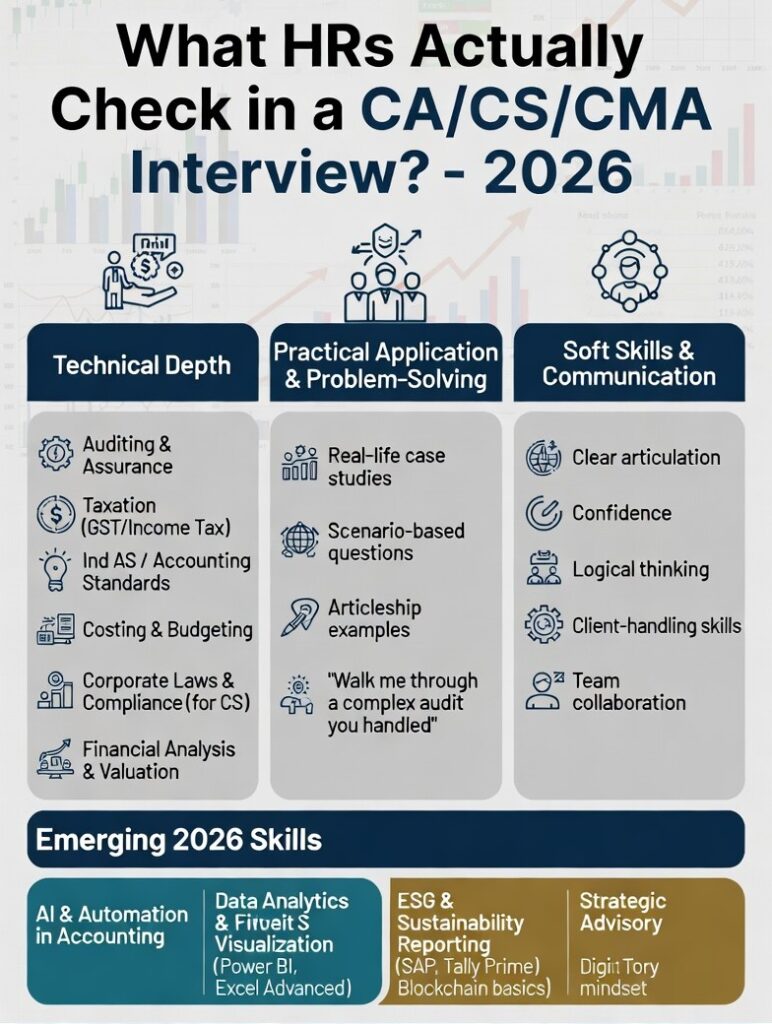
As an HR or recruiter, shortlisting resumes and interviewing CA, CS, or CMA candidates can be extremely time-consuming. You often receive hundreds of applications, but only a few turn out to be the right fit. In 2026, with rising competition and higher skill expectations, HRs need to quickly identify candidates who can contribute from day one. This guide explains exactly what experienced recruiters look for during resume shortlisting and interviews. Resume Shortlisting Process: What HRs Check in the First 10 Seconds Most resumes get rejected very quickly. Here’s the step-by-step process HRs typically follow: Pro Tip for HRs: Create a simple scoring sheet with these 4 points. It helps you shortlist candidates much faster and more fairly. Technical Knowledge: Practical Application Over Theory HRs don’t want candidates who only remember definitions from books. They want people who can apply their knowledge in real situations. What HRs check: How HRs test it: Communication and Stakeholder Skills Even technically strong candidates get rejected if they cannot explain things clearly to others. What HRs check: Simple test question: Ask them to explain GST to a non-finance person. Attitude and Learning Ability HRs want candidates who can learn fast and adapt to the team. What HRs check: Common question: “Tell me about a mistake you made during articleship and what you learned from it.” Common Red Flags HRs Watch For Quick Checklist HRs Use in 2026 Final Tip for Recruiters Stop hiring only on marks and qualifications. Focus more on practical skills, quality of articleship, communication, and attitude. If you’re tired of spending weeks screening and interviewing average candidates, consider using pre-screened talent pools. Platforms like CommerceCareer.in help HR teams connect with job-ready CA, CS, and CMA professionals who have already been vetted on skills and exposure. Frequently Asked Questions (FAQ) Q1: Is B.Com compulsory for becoming a CA? No. You can register for CA Foundation directly after 12th. B.Com is optional and can be done via correspondence during articleship. Q2: Which is better in 2026 — CA or MBA? CA offers deep technical expertise and respect in India, while MBA (from a top college) provides faster corporate entry and broader roles. Many professionals combine both (CA Inter + MBA Finance). Q3: How long does it take to get a response from state government jobs? Usually 2–6 months for initial screening. Many applicants never hear back. Private sector roles respond much faster. Q4: What are the must-have skills for commerce freshers in 2026? GST filing & reconciliation, Tally Prime, Advanced Excel (Power Query, macros), Power BI basics, and basic TDS compliance. Q5: How can I improve my chances if I studied from a tier-3 college? Focus on practical skills, certifications (NISM, Tally, Power BI), quantified resume bullets, and networking on LinkedIn. Many employers care more about what you can do than where you studied.
How to Hire Commerce Graduates (B.Com, CA, CS, MBA) in India – 2026 Recruiter Guide
Hiring the right commerce talent has become one of the biggest challenges for businesses in India today. Whether you run a CA firm, a growing startup, or a finance team in BFSI or fintech, finding candidates who combine solid domain knowledge with practical skills is tougher than ever. In this guide, we break down the real hiring landscape for commerce graduates in 2026 and share practical, battle-tested strategies that actually work. Why Commerce Graduates Are in High Demand in 2026 India’s economy is evolving rapidly with digital payments, stricter GST compliance, booming e-commerce, and fintech innovation. Companies need professionals who understand both traditional accounting and modern tools without needing months of training. According to recent industry reports, commerce graduates now show improved employability, making them a serious contender rather than a backup option. Popular Career Paths and Realistic Salary Expectations in 2026 Here’s what commerce graduates can expect in the current market: B.Com Freshers Qualified CAs MBA Finance Graduates Salaries vary significantly by city, company size, and practical exposure. Common Challenges Recruiters Face Hiring commerce talent isn’t always smooth. Here are the biggest pain points: 1. Skill Gap Many graduates know theory but lack hands-on experience with tools like GST filing, Tally Prime, Advanced Excel, or Power BI. 2. High Attrition Good talent gets poached quickly, especially in metros. First-year attrition in finance roles often ranges between 15–25%. 3. Expectation Mismatch Candidates want competitive pay, hybrid work, learning opportunities, and clear growth paths. Companies want immediate productivity. 4. Bias Against Non-Elite Colleges Strong candidates from tier-2 or tier-3 institutions are sometimes overlooked despite having relevant skills. 5. Long Hiring Cycles Finding someone with both domain knowledge and modern digital skills can take weeks or even months. These challenges end up costing time, money, and team morale. Smart Hiring Solutions That Actually Work in 2026 Here’s what successful organizations are doing differently: 1. Get Crystal Clear on Requirements Define exact skills, tools, and behaviors needed. Be specific does the role need financial modelling, compliance knowledge, or stakeholder management? 2. Cast a Wider Net 3. Test Real Skills, Not Just Resumes Move beyond interviews. Use practical assessments: Excel/GST case studies, financial analysis exercises, or short role-plays. 4. Strengthen Your Employer Brand Highlight learning opportunities, flexible work, and real growth stories from your team. 5. Offer Competitive and Thoughtful Packages Benchmark offers properly. Include performance bonuses, certification support, and a clear career roadmap. 6. Leverage Technology Wisely Use AI-powered screening tools and good ATS systems, but don’t rely on them completely human judgment still matters for cultural fit. 7. Focus on Retention from Day One A strong onboarding program with mentorship can dramatically reduce early exits. What 2026 and Beyond Hold The future belongs to “T-shaped” professionals deep commerce knowledge combined with digital fluency. AI in auditing, sustainable finance, and data-driven decision making are becoming table stakes. For recruiters: Build continuous talent pipelines instead of reactive hiring. For graduates: Focus on practical skills, internships, and certifications (NISM, Power BI, digital finance) to stand out. Final Thoughts Hiring the right commerce graduates whether B.Com, CA, CS, or MBA can transform your finance and operations functions. But it requires a thoughtful, skill-first approach rather than a “fill the seat” mentality. If you’re struggling to find reliable commerce talent or want help designing a smarter recruitment strategy, feel free to explore CommerceCareer.in a platform built specifically to connect businesses with high-potential commerce professionals across India. What has been your biggest challenge while hiring finance or commerce talent lately? Feel free to share in the comments. Frequently Asked Questions (FAQ) Q1: Is B.Com compulsory for CA? No. You can register for CA Foundation directly after 12th. B.Com is optional and can be pursued via correspondence during articleship. Q2: Which is better in 2026 CA or MBA? CA offers deep technical expertise and respect in India, while MBA (from a top college) provides faster corporate entry and broader roles. Many professionals combine both (CA Inter + MBA Finance). Q3: How long does it take to get a response from state government jobs? Usually 2–6 months for initial screening. Many applicants never hear back. Private sector roles respond much faster. Q4: What are the must-have skills for commerce freshers in 2026? GST filing & reconciliation, Tally Prime, Advanced Excel (Power Query, macros), Power BI basics, and basic TDS compliance. Q5: How can I improve my chances if I studied from a tier-3 college? Focus on practical skills, certifications (NISM, Tally, Power BI), quantified resume bullets, and networking on LinkedIn. Many employers care more about what you can do than where you studied.